 English
 Français

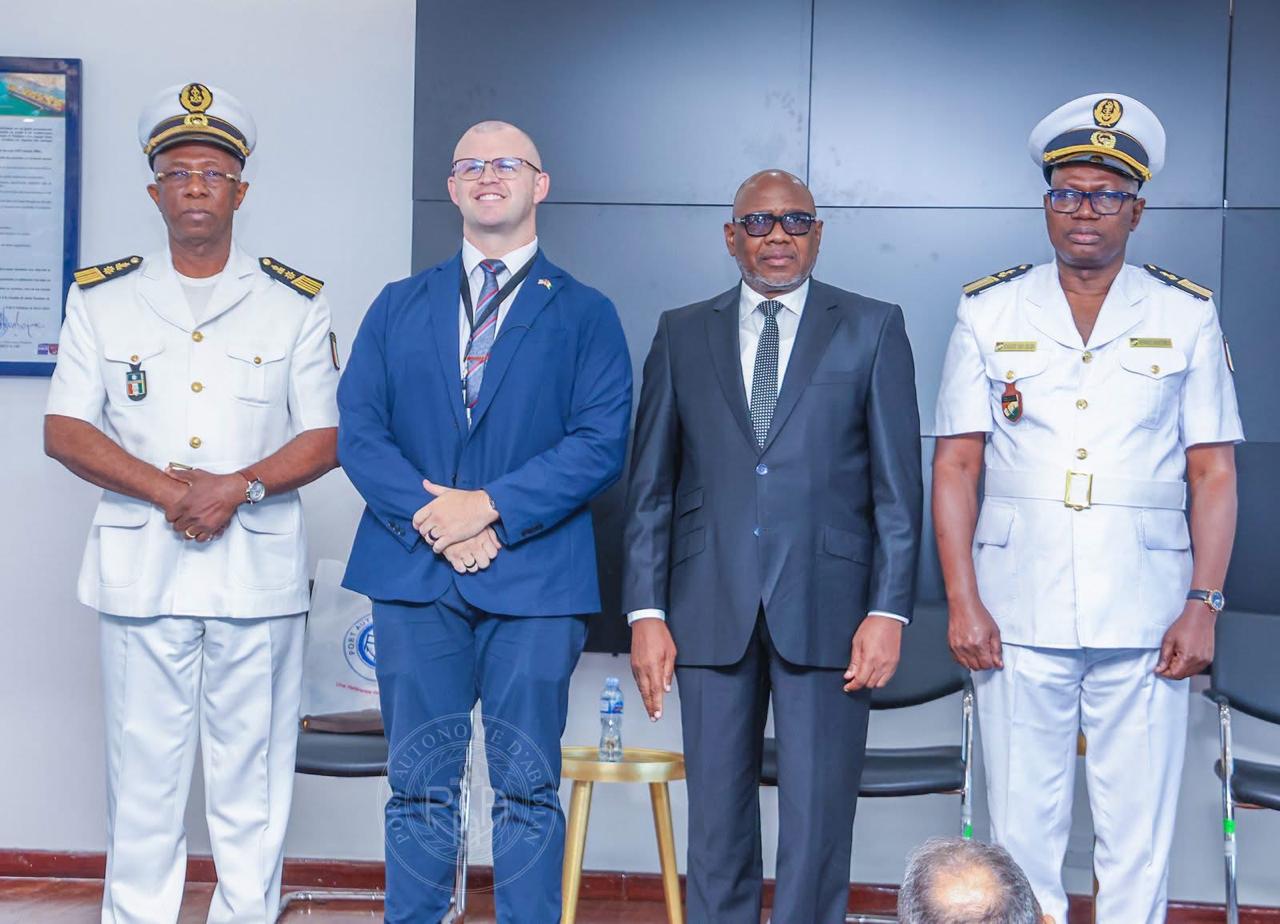
For five days, American uniforms rubbed shoulders with those of the Abidjan Port Community. Not for a military maneuver, but to examine the defenses of a port that weighs heavily in West African trade. This mission is part of the International Port Security Program of the Government of the United States of America, a system that has supported the Ivorian port authorities for several years. On the agenda, a seminar devoted to security exercises, as well as an in-depth assessment of two major terminals of the Port of Abidjan, namely Côte d'Ivoire Terminal and the Abidjan Polyvalent Terminal. These two infrastructures, among the most strategic on the platform, have been the subject of careful examination of safety procedures and equipment.
At the opening of the works, Colonel Coffi Yao Emmanuel, Commander of the Port of Abidjan, representing the Director General of the Autonomous Port of Abidjan (PAA), Kassoum Traoré, welcomed an initiative that he considers promising for the safety and resilience of the port platform. He insisted on the need for a coordinated mobilization of all stakeholders in the Abidjan Port Community, the only guarantee, according to him, of effective anticipation of risks and a rapid response to possible threats. This collaboration is not isolated.It extends already dense maritime cooperation between Abidjan and Washington, illustrated in particular by the Obangame Express naval exercise organized in May 2026 in the Gulf of Guinea, and by a previous seminar on port security management held last March under the aegis of the DGAM.
For the Port of Abidjan, this mission reinforces a long-standing commitment, namely compliance with the International Code for the Security of Ships and Port Facilities (ISPS Code), a standard with which the platform has complied since 2004. A demanding framework, but one that has become essential to reassure shipowners and investors about the reliability of a port which aims to remain the reference maritime gateway in West Africa.