
154 result(s) for “Agence Japonaise de Coopération Internationale”

Born from the alliance of the Senegalese group Kirène and the Farès group, Agro-Industrie de Côte d'Ivoire (AGROCI) has established itself in a few years as one of the most dynamic agri-food companies in the country. Located in Bonoua, around fifty kilometers from Abidjan, this modern factory intends to reduce Ivorian...

Founded more than 60 years ago in Abidjan, the SIFCA Group has established itself as the first private agro-industrial group in Côte d'Ivoire and one of the most influential players in the West African economy. Specializing in palm oil, natural rubber and cane sugar, this Ivorian behemoth now operates in five countries...
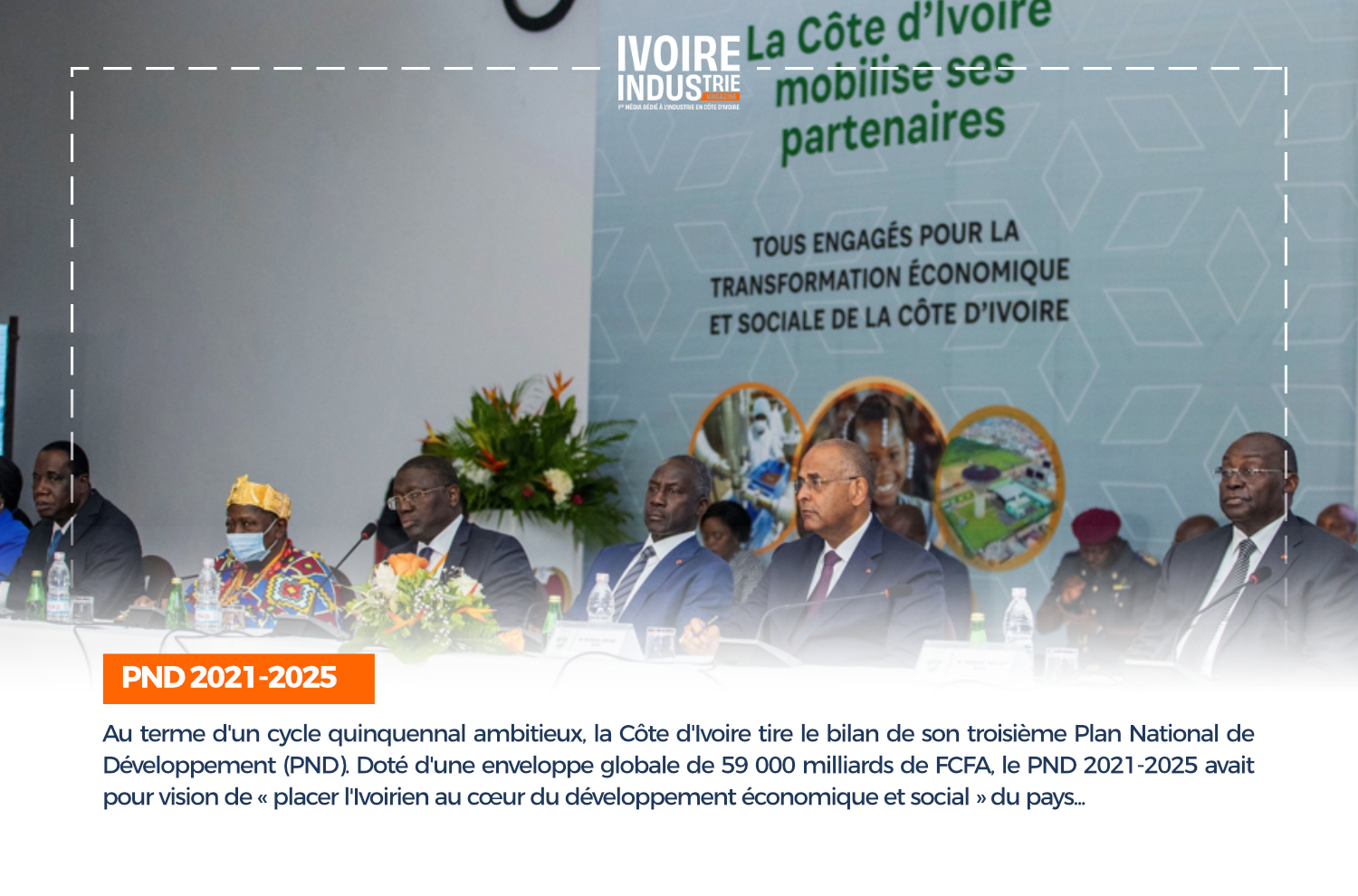
At the end of an ambitious five-year cycle, Côte d'Ivoire takes stock of its third National Development Plan (PND). With an overall envelope of 59,000 billion FCFA, the PND 2021-2025 had the vision of “placing the Ivorian at the heart of the economic and social development” of the country. With a strategy structured ar...
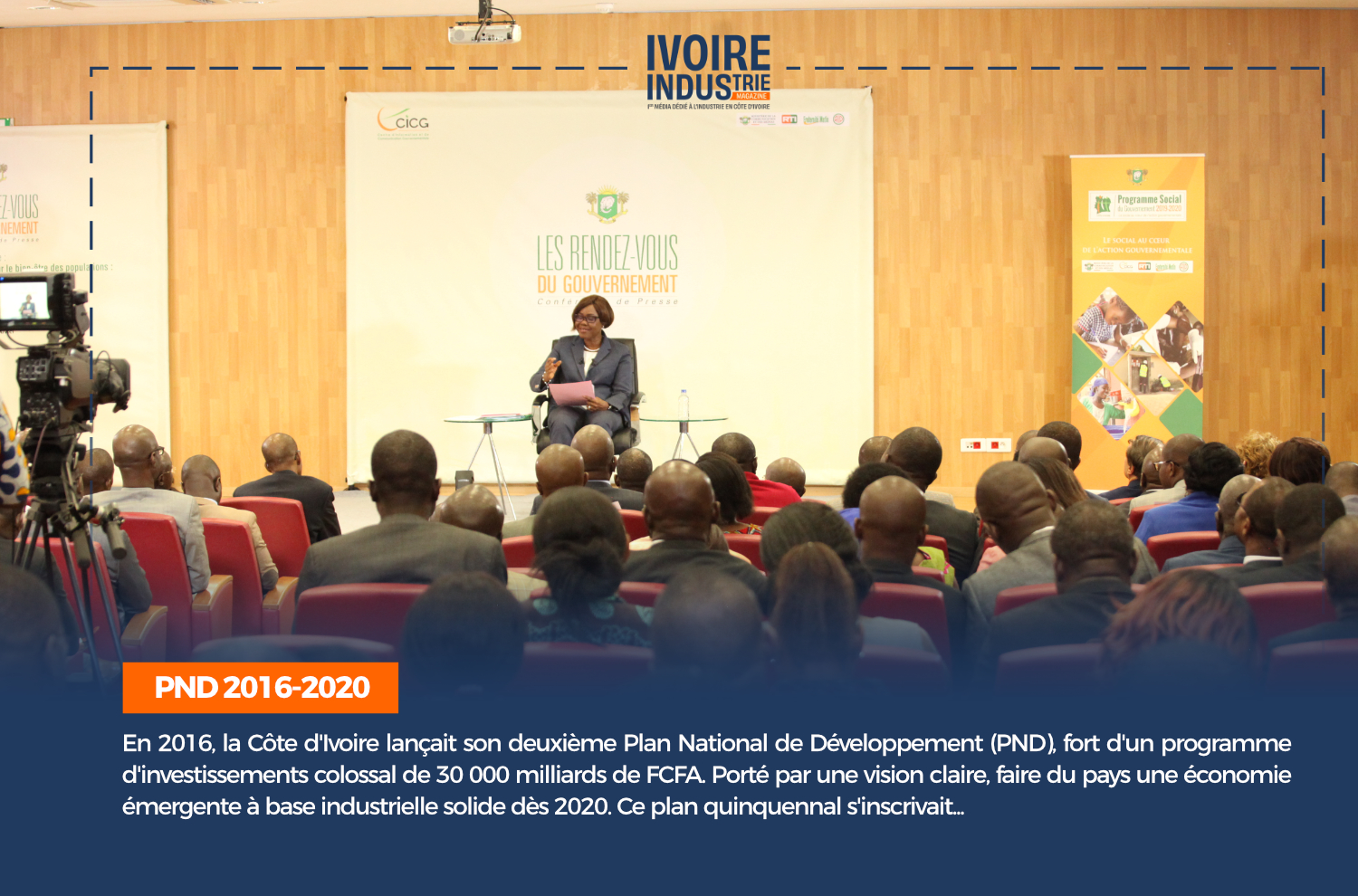
In 2016, Côte d'Ivoire launched its second National Development Plan (PND), with a colossal investment program of 30,000 billion FCFA. Driven by a clear vision, to make the country an emerging economy with a solid industrial base from 2020. This five-year plan was a continuation of the 2012-2015 PND, the results of whi...
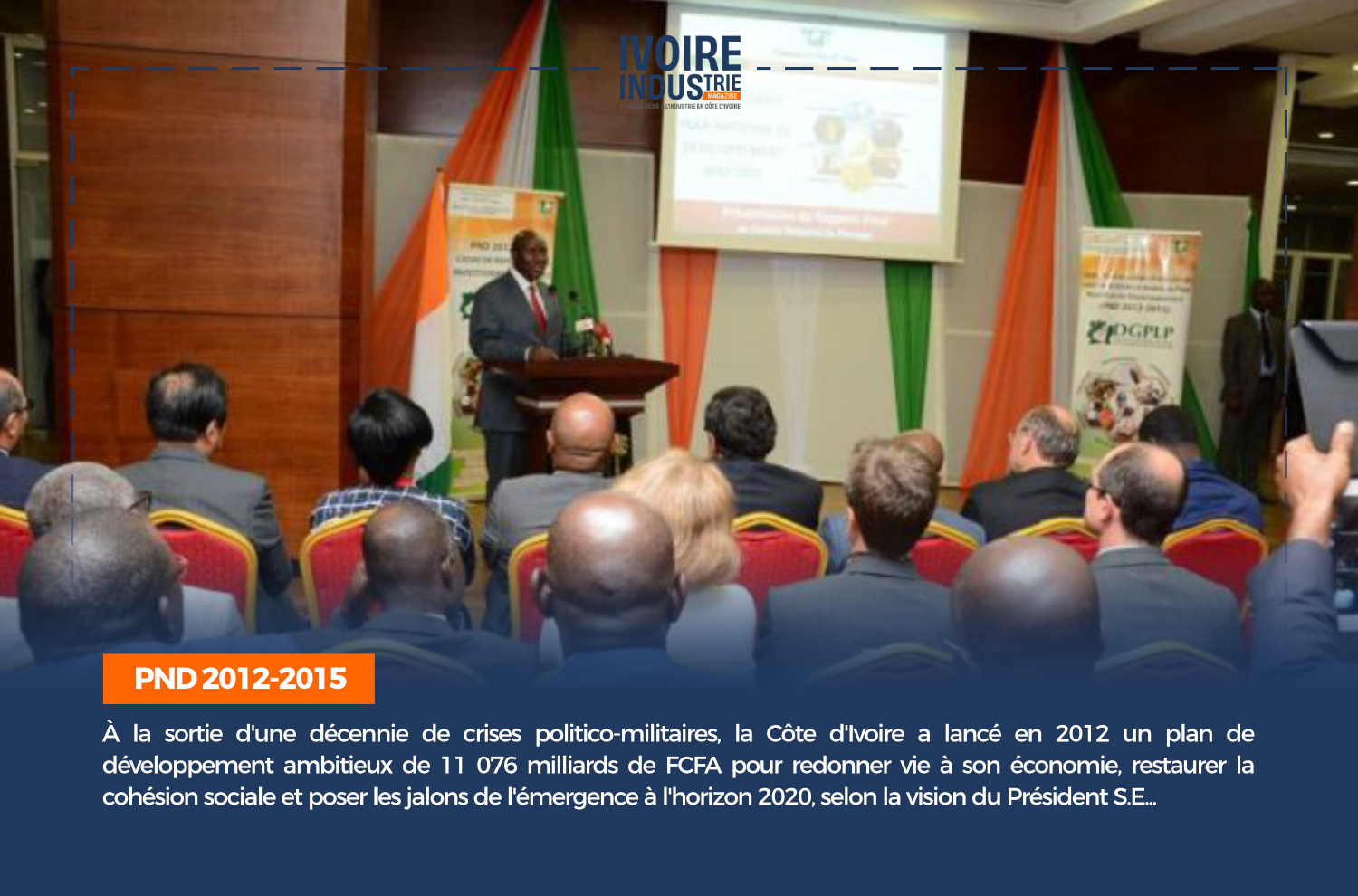
At the end of a decade of political-military crises, Côte d'Ivoire launched in 2012 an ambitious development plan of 11,076 billion FCFA to revive its economy, restore social cohesion and lay the foundations for emergence by 2020, according to the vision of the Head of State H.E Alassane OUATTARA. Four years later, the...

On January 12, 1994, a decision from Dakar shattered the monetary certainties of 14 African countries. The CFA franc suddenly loses 50% of its value against the French franc. For Ivory Coast, the largest economy in the West African Economic and Monetary Union (UEMOA), it is both a painful electric shock and a structura...

In the 1990s, the International Monetary Fund and the World Bank exercised unprecedented control over the Ivorian economy and politics. Between imposed remedies and deep social fractures, the results of this decade remain, even today, a subject of controversy.
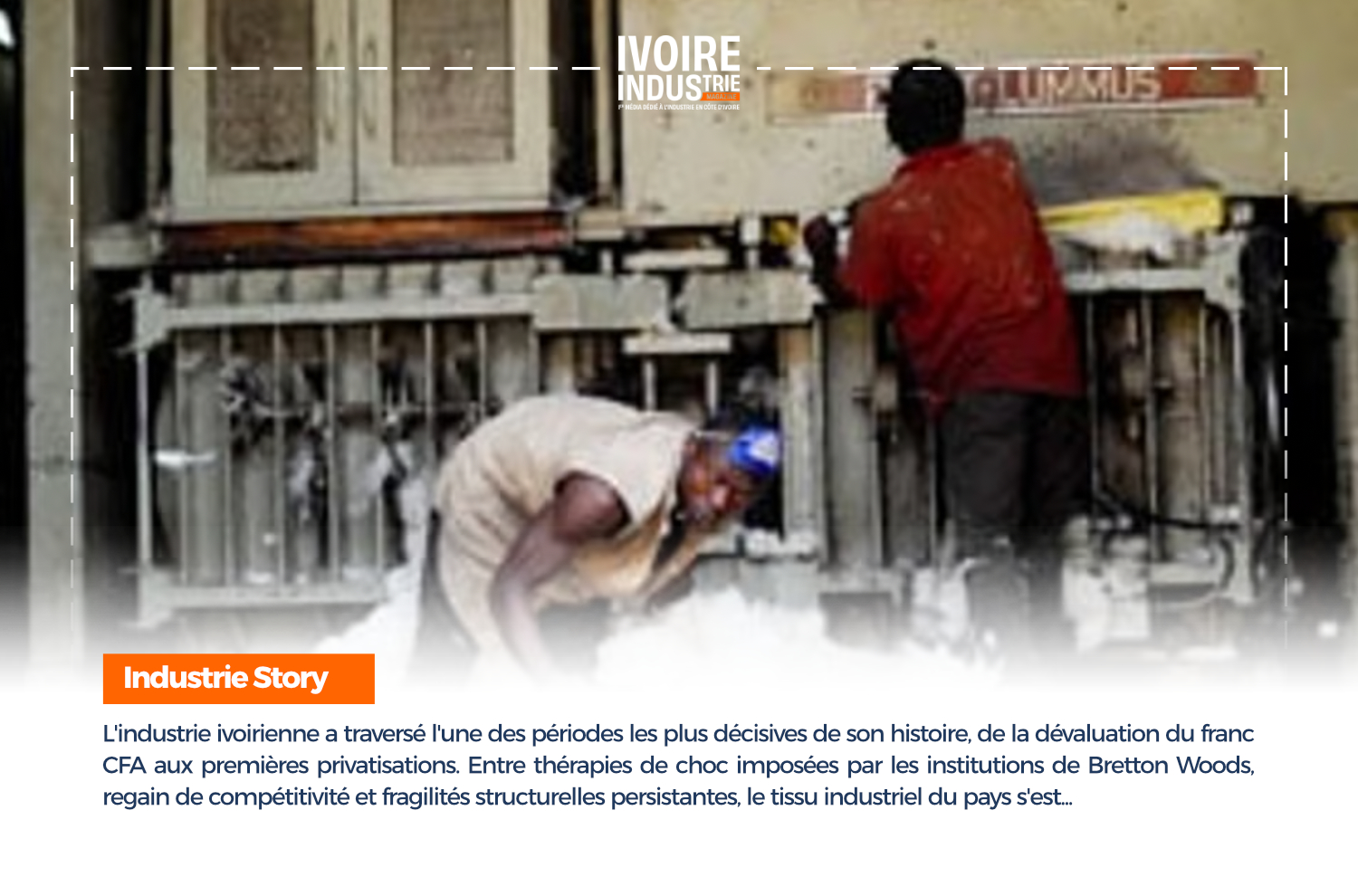
Ivorian industry has gone through one of the most decisive periods in its history, from the devaluation of the CFA franc to the first privatizations. Between shock therapies imposed by the Bretton Woods institutions, renewed competitiveness and persistent structural fragilities, the country's industrial fabric has been...
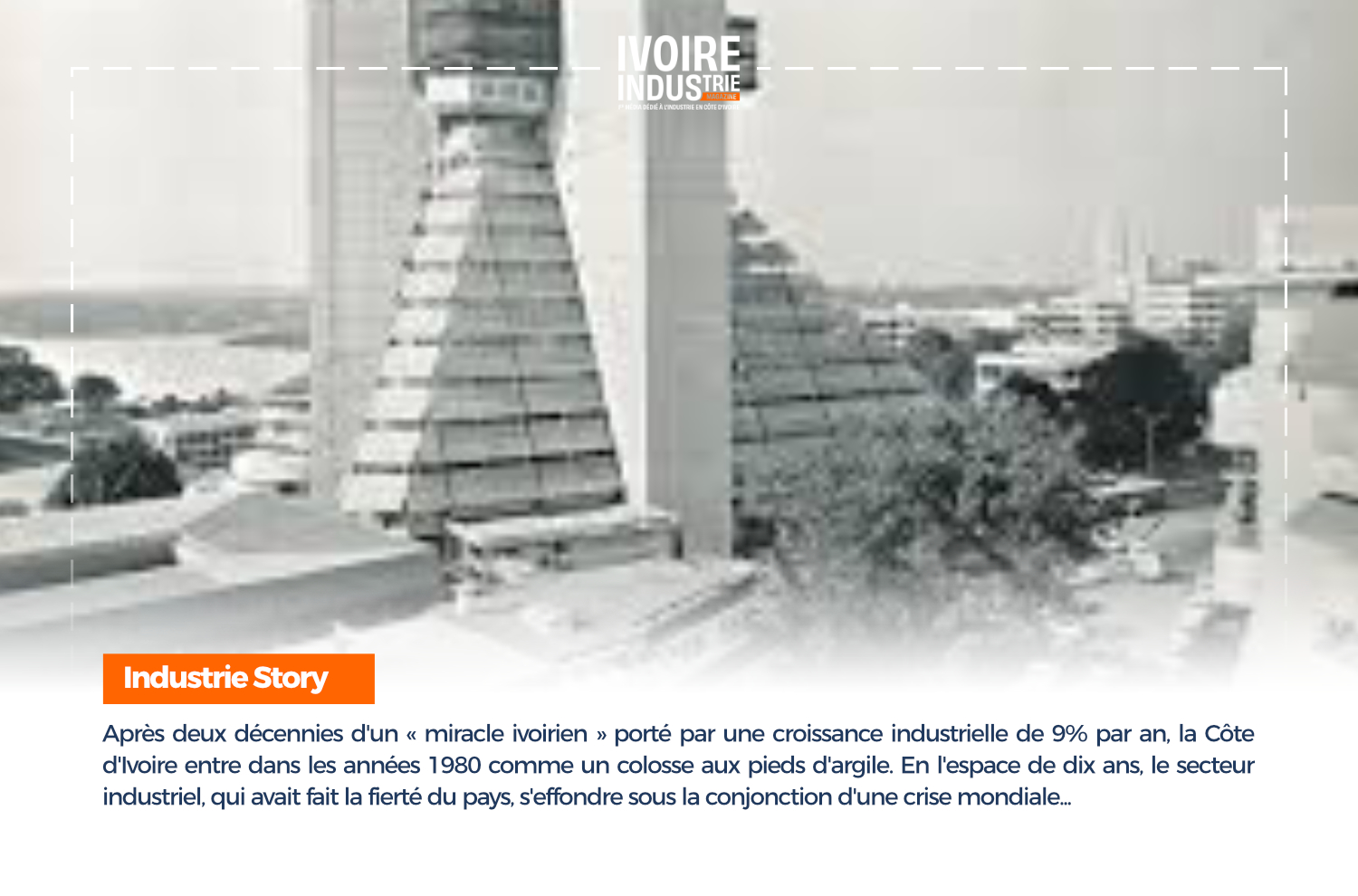
After two decades of an “Ivorian miracle” driven by industrial growth of 9% per year, Ivory Coast entered the 1980s like a colossus with feet of clay. In the space of ten years, the industrial sector, which had been the pride of the country, collapsed under the combination of a global crisis, an economic model on its l...
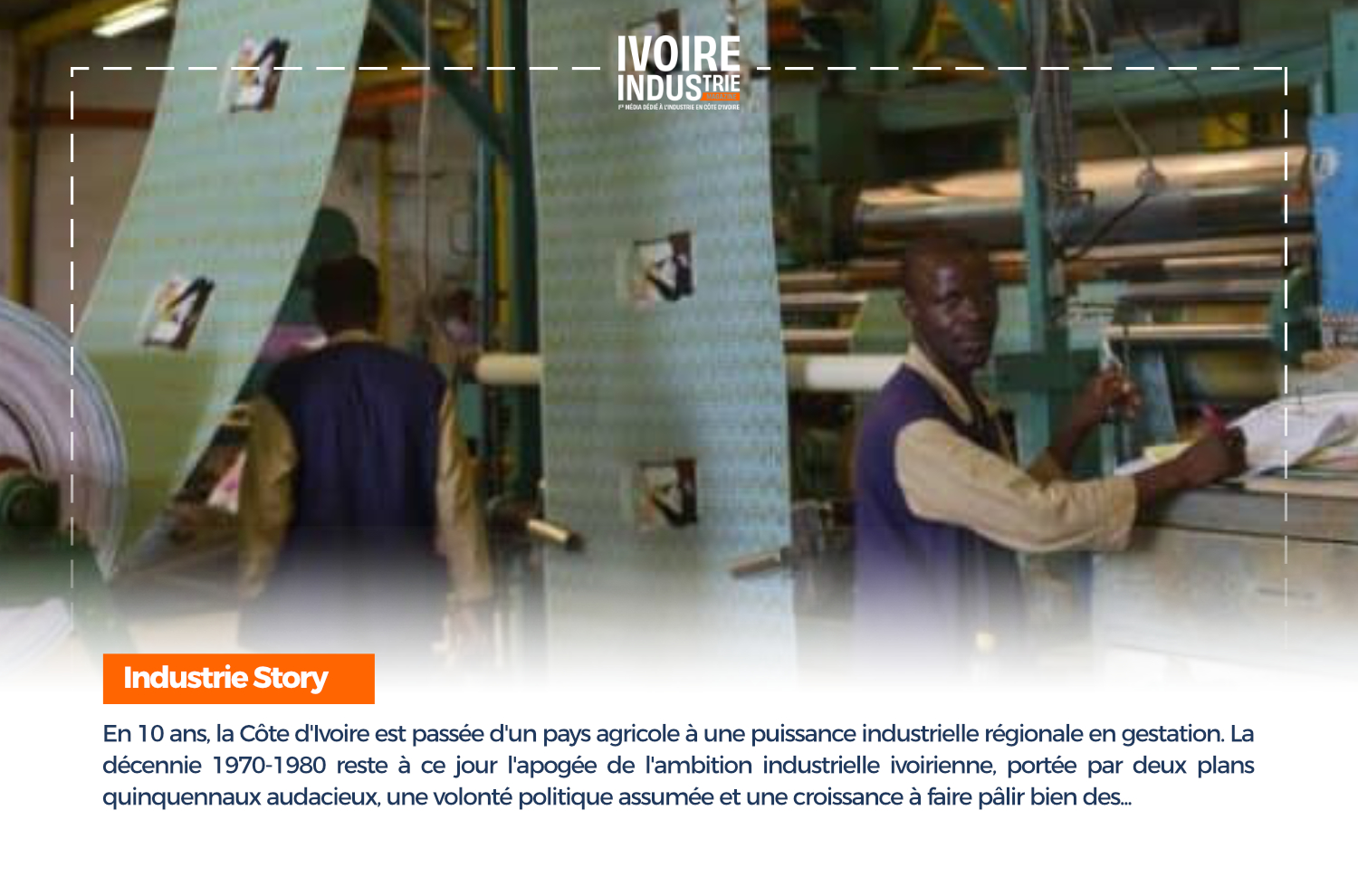
In 10 years, Côte d'Ivoire has gone from an agricultural country to a regional industrial power in the making. The 1970-1980 decade remains to this day the apogee of Ivorian industrial ambition, driven by two audacious five-year plans, an assumed political will and growth that would make many economies around the world...
 English
 Français