
133 result(s) for “Conférence internationale de la mobilité durable et du climat”

Founded more than 60 years ago in Abidjan, the SIFCA Group has established itself as the first private agro-industrial group in Côte d'Ivoire and one of the most influential players in the West African economy. Specializing in palm oil, natural rubber and cane sugar, this Ivorian behemoth now operates in five countries...

In Côte d'Ivoire, industrialization is no longer based solely on political ambitions, but on a rapidly changing legal arsenal. From law n°2025-393 of June 11, 2025 on industrial zones to texts on free zones and standardization, the State is refining its tools to attract investors, organize industrial space and better s...
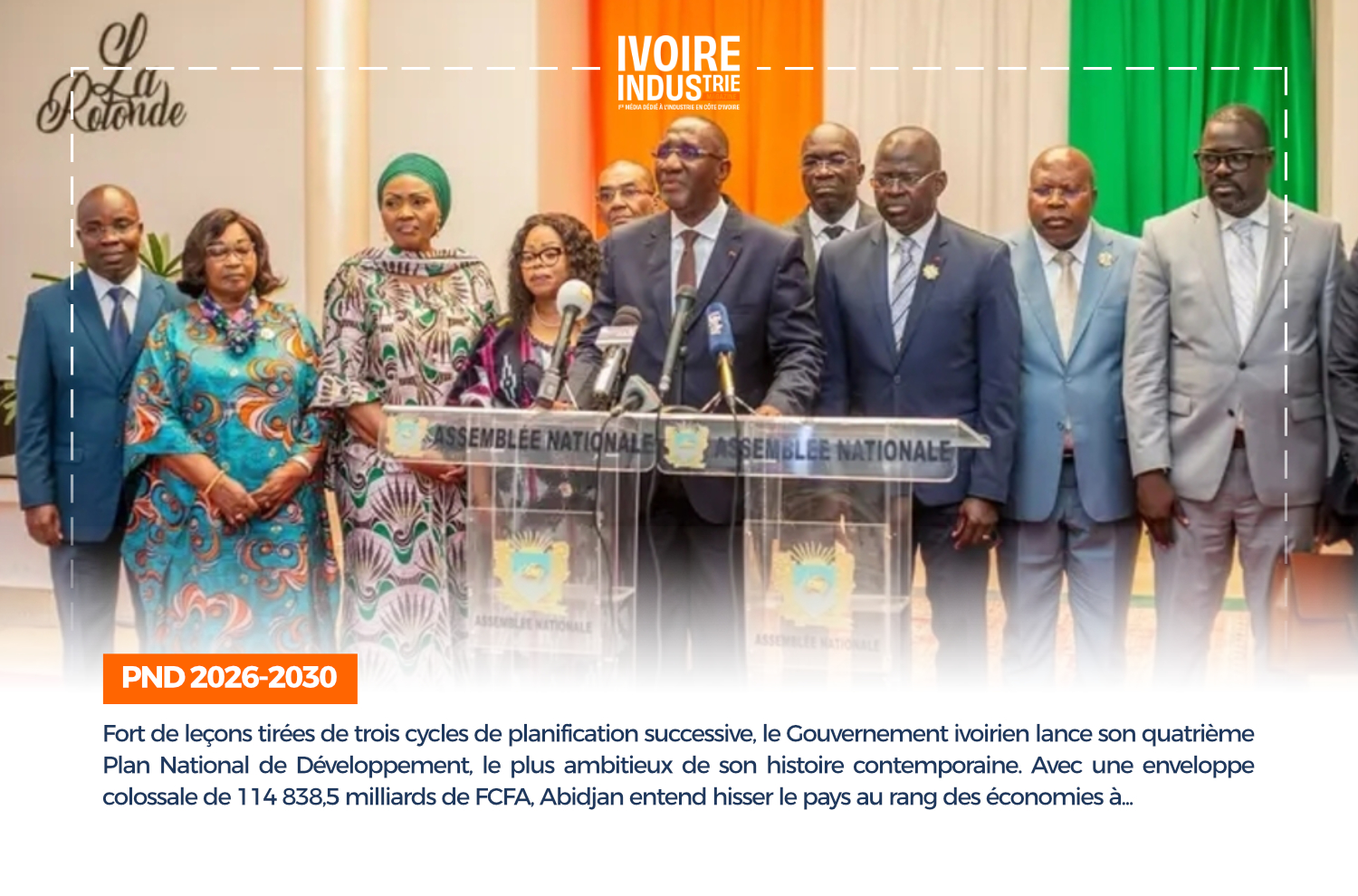
Drawing on lessons learned from three successive planning cycles, the Ivorian Government under the Presidency of H.E Alassane OUATTARA is launching its fourth National Development Plan (PND), the most ambitious in its contemporary history. With a colossal envelope of 114,838.5 billion FCFA, Abidjan intends to raise the...
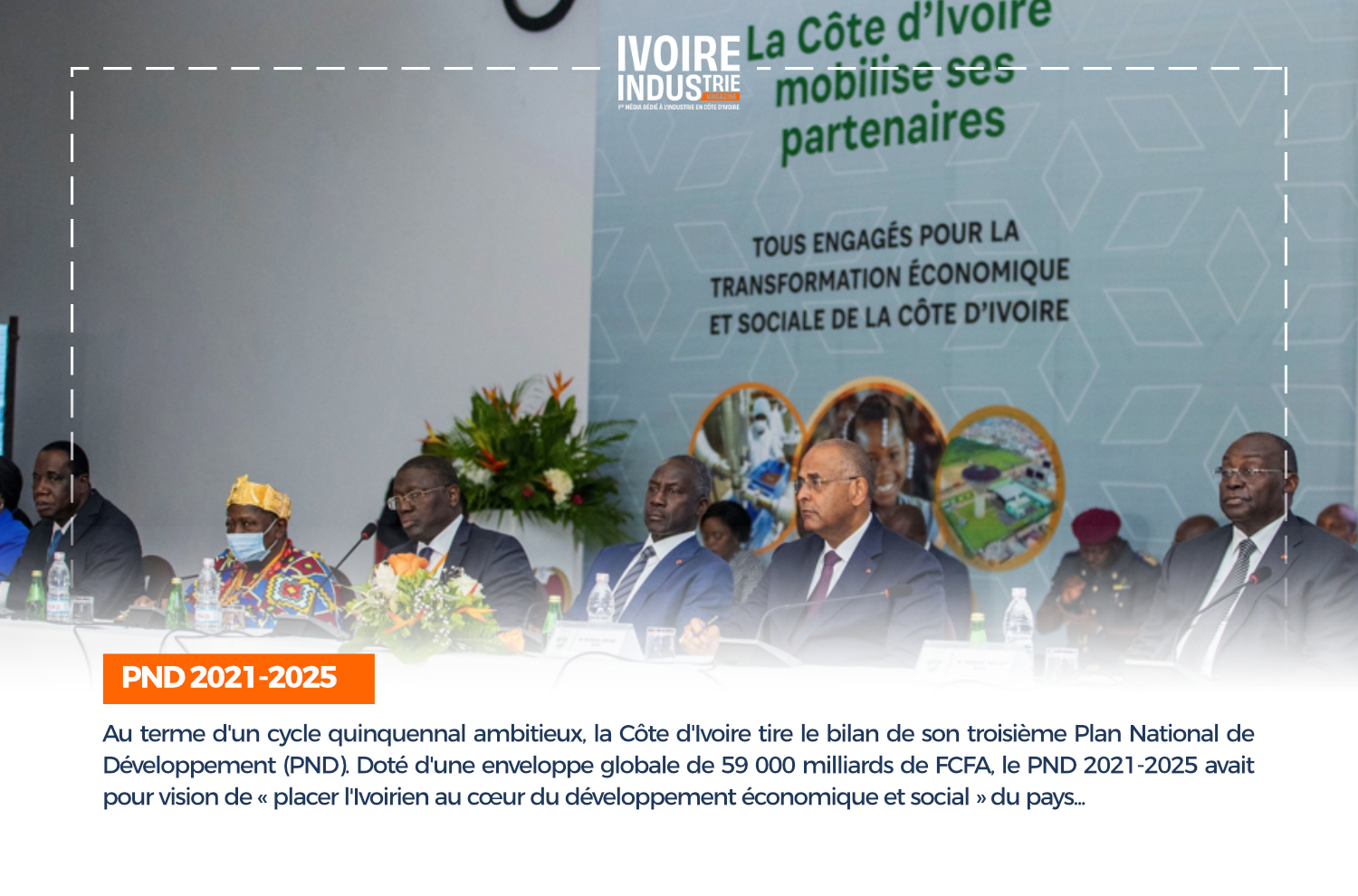
At the end of an ambitious five-year cycle, Côte d'Ivoire takes stock of its third National Development Plan (PND). With an overall envelope of 59,000 billion FCFA, the PND 2021-2025 had the vision of “placing the Ivorian at the heart of the economic and social development” of the country. With a strategy structured ar...
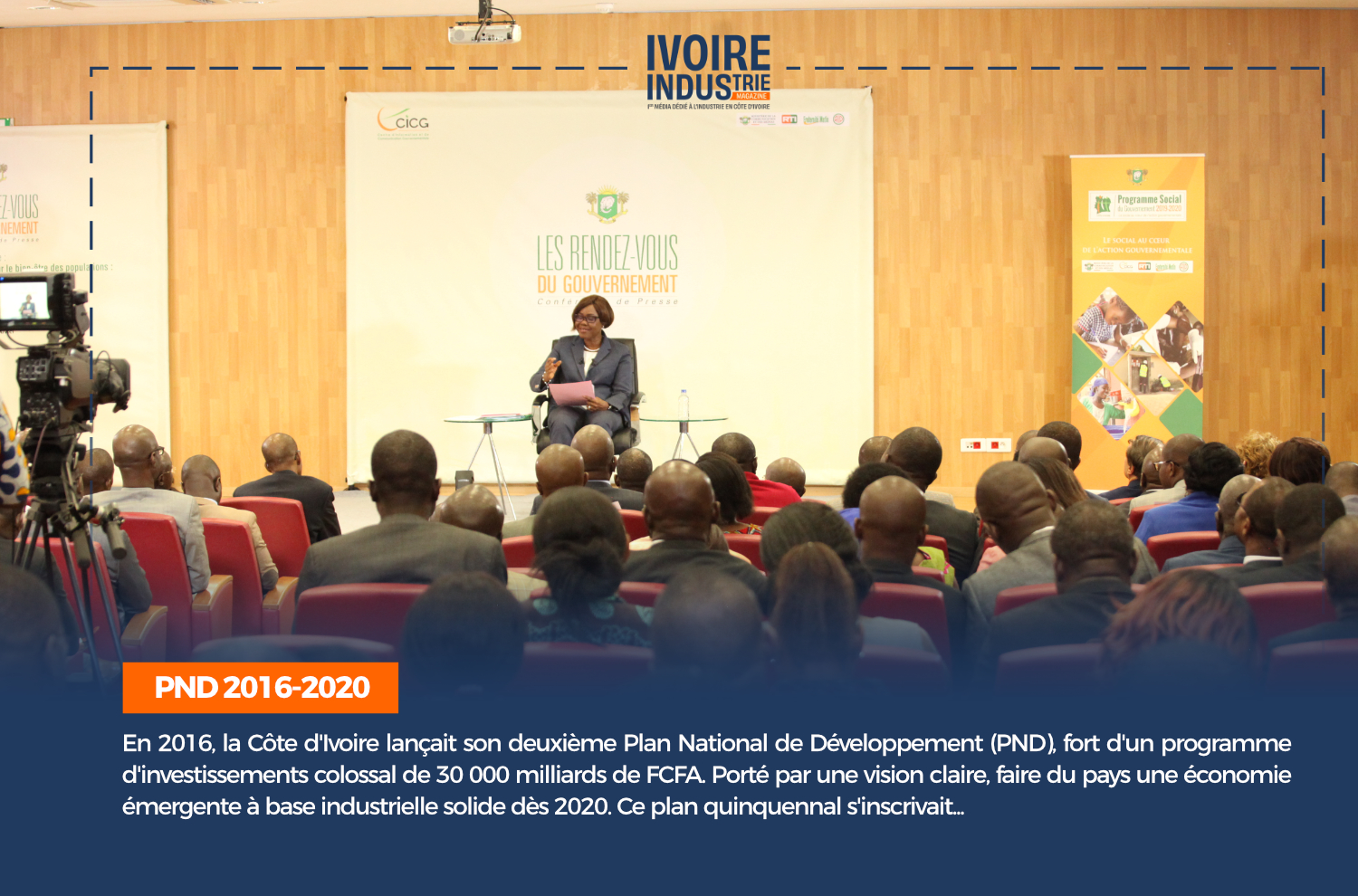
In 2016, Côte d'Ivoire launched its second National Development Plan (PND), with a colossal investment program of 30,000 billion FCFA. Driven by a clear vision, to make the country an emerging economy with a solid industrial base from 2020. This five-year plan was a continuation of the 2012-2015 PND, the results of whi...
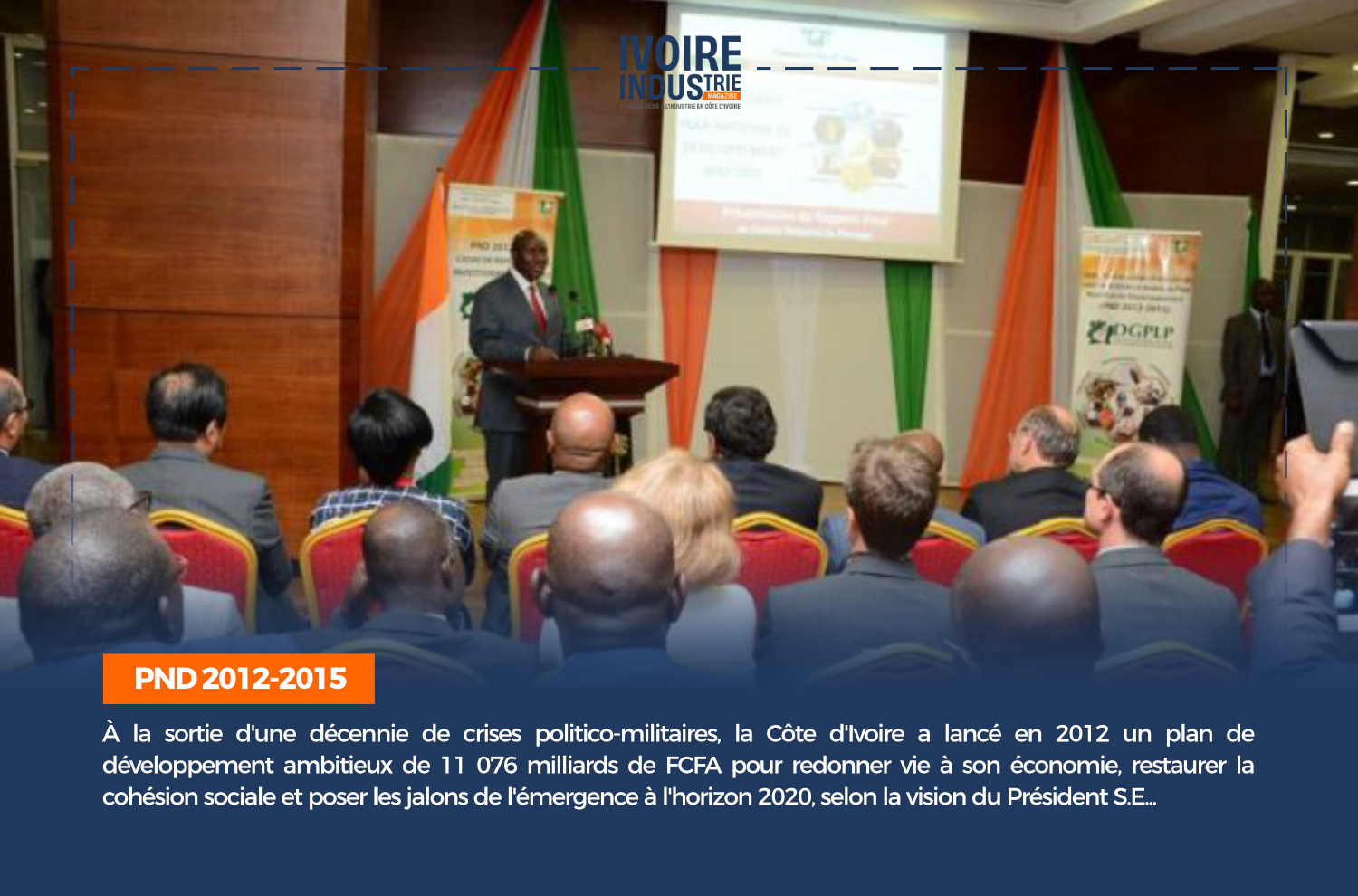
At the end of a decade of political-military crises, Côte d'Ivoire launched in 2012 an ambitious development plan of 11,076 billion FCFA to revive its economy, restore social cohesion and lay the foundations for emergence by 2020, according to the vision of the Head of State H.E Alassane OUATTARA. Four years later, the...
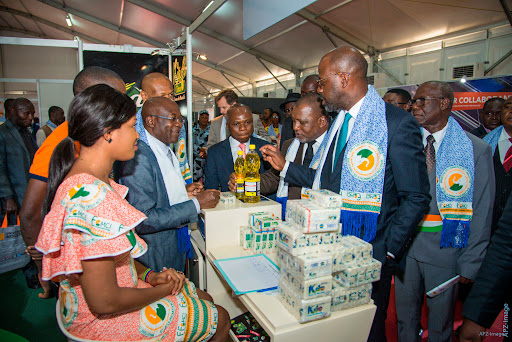
Launched in 2010 in the wake of West African agro-industry, Africa West Industries (AWI) has established itself in 15 years as one of the flagships of Côte d'Ivoire's manufacturing industry. Specializing in the production of Marseille soaps and edible vegetable oil, this 100% Ivorian company, with more than 400 employe...
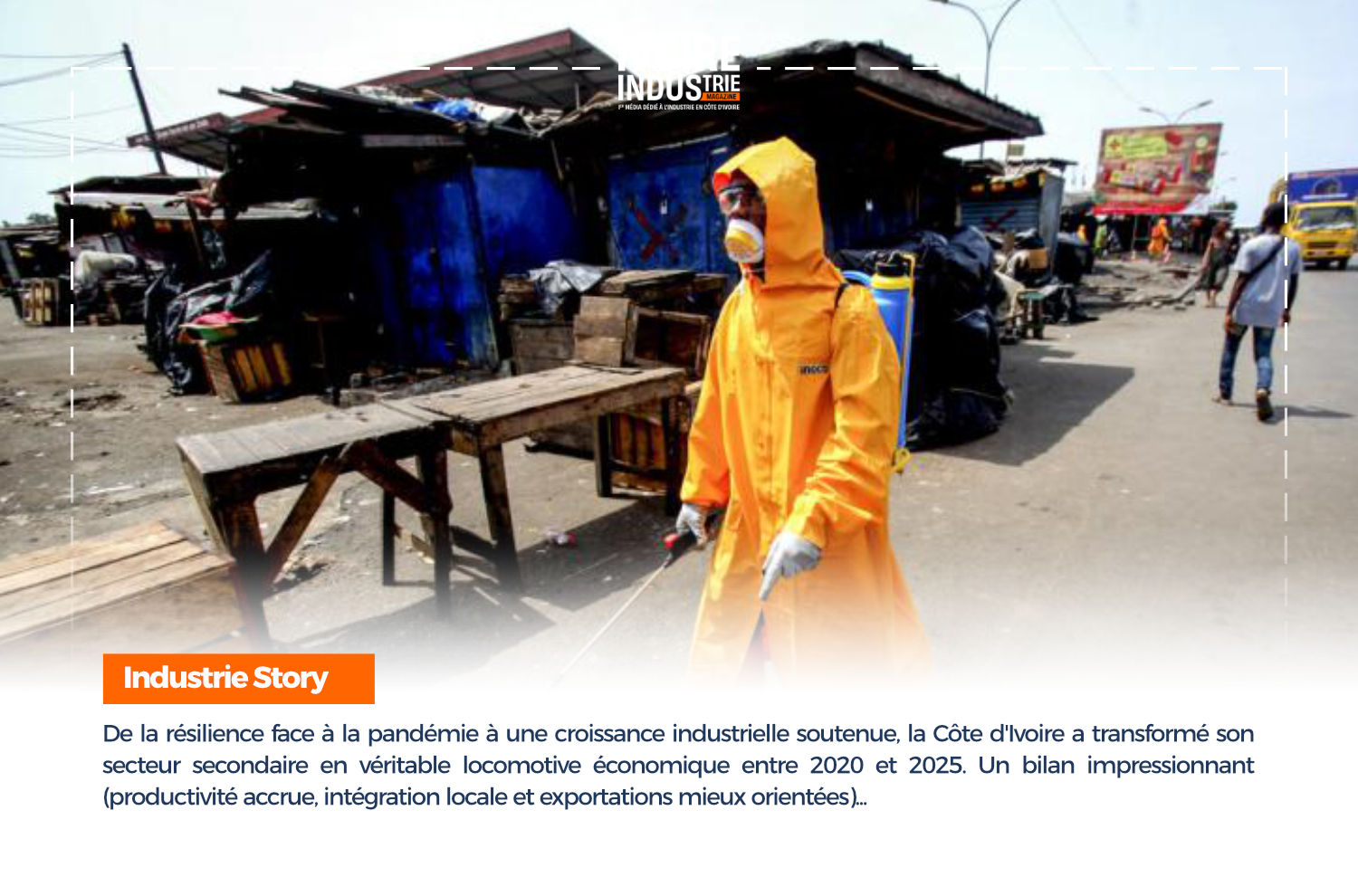
From resilience in the face of the pandemic to sustained industrial growth, Côte d'Ivoire has transformed its secondary sector into a real economic locomotive between 2020 and 2025. An impressive record (increased productivity, local integration and better oriented exports). However, structural challenges remain and ta...

Ivory Coast, once the economic showcase of sub-Saharan Africa, went through one of the darkest phases of its industrial history between 2000 and 2010. Undermined by political instability, the failed coup d'état of 2002 and its consequences on investment, the Ivorian productive system has retreated, leaving behind close...

In the 1990s, the International Monetary Fund and the World Bank exercised unprecedented control over the Ivorian economy and politics. Between imposed remedies and deep social fractures, the results of this decade remain, even today, a subject of controversy.
Ivorian industry has gone through one of the most decisive periods in its history, from the devaluation of the CFA franc to the first privatizations. Between shock therapies imposed by the Bretton Woods institutions, renewed competitiveness and persistent structural fragilities, the country's industrial fabric has been...
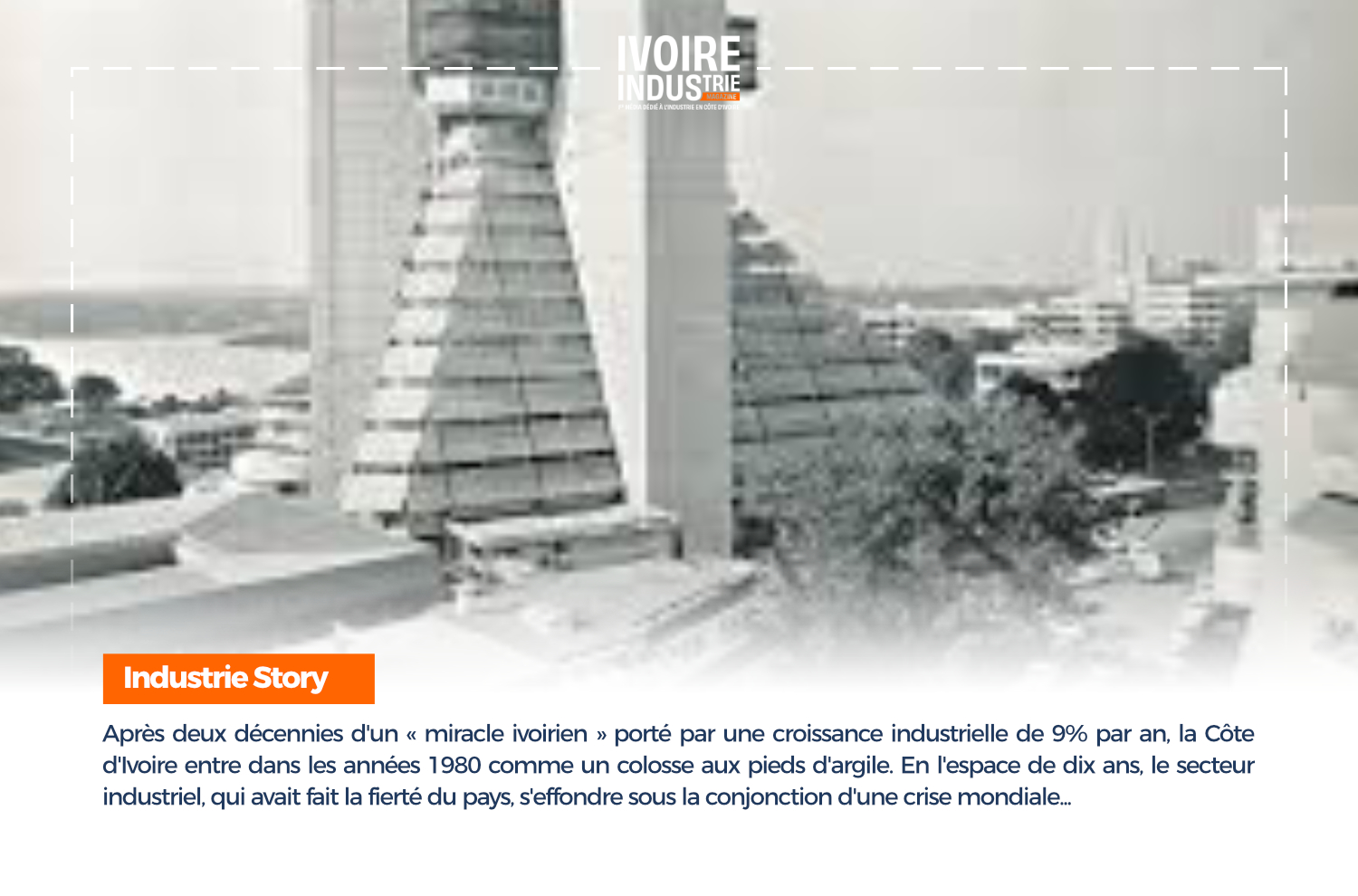
After two decades of an “Ivorian miracle” driven by industrial growth of 9% per year, Ivory Coast entered the 1980s like a colossus with feet of clay. In the space of ten years, the industrial sector, which had been the pride of the country, collapsed under the combination of a global crisis, an economic model on its l...
 English
 Français